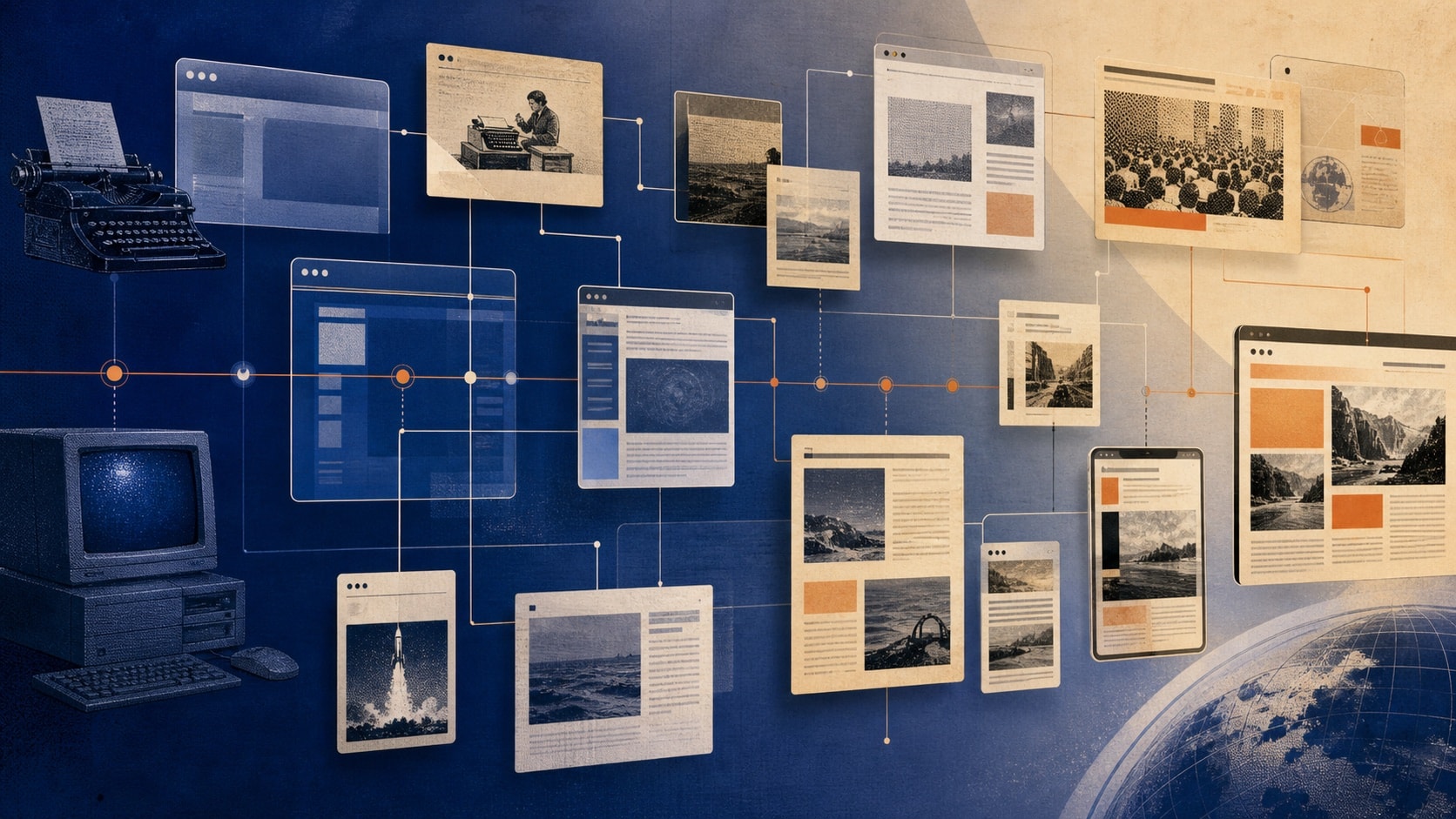
A Short History of Online Article Directories
Before social feeds became a dominant route to online writing, article directories offered a simple exchange. Writers supplied reusable articles. Directory operators organized and published them. Other site owners could discover material to republish, often with an author note attached. Search engines connected the pages to readers who might never visit the directory's homepage.
ArticlesLand belonged to that broad publishing environment.
Why the directory model emerged
The early web lowered the cost of publication but did not solve discovery. A writer could make a page, yet attracting readers required links, indexing, or an established audience. Directories gathered many subjects under one roof and gave each contribution a stable page. Categories, date guides, and search functions made a growing collection navigable.
For publishers, the model created volume. A general-interest directory could cover business, travel, home, technology, culture, and personal advice without maintaining a large editorial staff. For contributors, the author note offered recognition and a path to related work. The arrangement resembled syndication, but with the speed and loose structure of the open web.
The permalink as an identifier
A dated address such as /2009/03/25/title/ carried several pieces of information: when an item entered a directory, how its title was rendered, and where incoming links should point. Even when a site's design changed, that address could remain a durable identifier.
The model's strengths
Article directories made publication accessible. They preserved writing from contributors who lacked their own platform, gathered niche information, and encouraged subjects to cross category boundaries. A reader who arrived for one travel article might discover a writing guide or historical essay nearby.
A dated guide also created a visible chronology. Readers could see a publication accumulate over time. In the best cases, categories and internal links turned separate submissions into a browsable reference collection.
The model's weaknesses
Low barriers can create uneven quality. Some directories accepted lightly reviewed submissions, repeated material published elsewhere, or allowed promotional notes to dominate the editorial purpose. Search visibility encouraged quantity, and similar articles multiplied around the same phrases. A page could appear independent while serving mainly as a route to a commercial offer.
Those weaknesses make source evaluation essential. An old directory article may preserve a useful firsthand detail, a period belief, or a vanished link. It may also contain obsolete facts, unsupported comparisons, and language written for search systems rather than readers. Preservation should not turn historical availability into a blanket endorsement.
From directories to platforms and newsletters
As publishing tools changed, writers gained easier ways to maintain their own sites and audiences. Social platforms centralized distribution. Search systems altered how they evaluated duplicate and low-quality content. Later, newsletters and membership publications renewed interest in direct relationships between writers and readers.
The article directory did not vanish so much as break into different functions. Large publishing platforms host contributors. Knowledge bases organize evergreen explanations. Curated newsletters distribute links. Personal sites hold a writer's guide. The old directory combined pieces of all four.
For examples, see Opportunity Strikes in Panama and the Panama beach article.
Why article directories remain worth reading
Early article directories reveal how the web learned to circulate practical writing at scale. They contain both the generosity and the shortcuts of that experiment. Reading them carefully shows how online authority was built from stable pages, incoming links, recognizable formats, and repeated claims.
The form may look simple now, but its central question remains current: how can a publication help readers find useful writing and understand why it should be trusted? Every page in a reading room is another attempt to answer it.