
Coney Island from the boardwalk
Walk the Brooklyn shore where a beach, an amusement district and a neighborhood meet.
2 min read
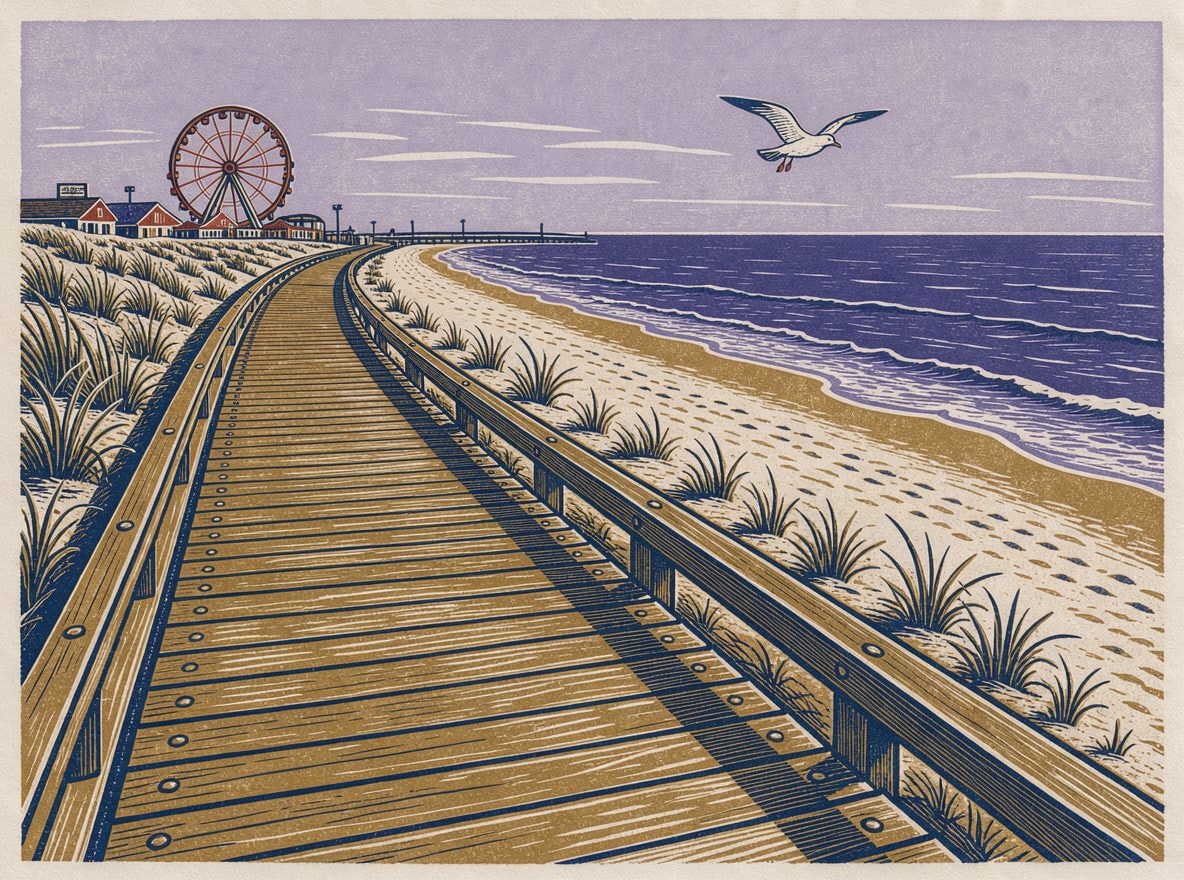
At Coney Island, a person walking along the boards and a person sitting on the sand can spend the day a few yards apart and tell quite different stories about Brooklyn. The first sees a long procession of amusements, courts and entrances. The second looks mostly at the Atlantic.
Start from the water
New York City Parks describes “nearly 3 miles of sandy beaches.” The distinction between beach and boardwalk matters. The Riegelmann Boardwalk is the wooden walkway alongside the shore. It is a way to see the water and the neighborhood without crossing the sand. The beach and boardwalk area has courts for volleyball, handball and basketball, along with playgrounds. NYC Parks on Coney Island Beach & Boardwalk
A 2008 Articlesland contributor set out to explain why people came here. They named the New York Aquarium, the amusements along the waterfront and the Brooklyn Cyclones baseball team. Those are very different ways to spend an afternoon. Mark one on a map before using “Coney Island” as a single destination.
A place beyond the summer beach
A walk along the boards can make sense in a different season from a swim. The old article mentioned the Polar Bear Club as evidence that some residents and visitors made the waterfront part of winter life. Such a tradition tells you something about the place. For present-day swimming access and lifeguard arrangements, consult the parks department’s current beach information.
The early description also treated Coney Island as a strip of sand separating the ocean from the city. Stand on the boardwalk in your mind and turn around. The streets, shops, courts and rides on the landward side are part of the same neighborhood. Naming just one of them makes an account of a visit more precise than a long list of adjectives about the sea.
Two useful ways to read the same walk
If you are interested in public space, follow how people move from the street to the boardwalk to the beach. If you are interested in how people describe a place, compare the parks department’s inventory with the contributor’s list of reasons to come. One tells you where activities fit. The other helps explain why a reader might remember them.