
From a bench to a barstool
Look under a familiar seat to see what stone, bent wood and a foot rail do for a sitter.
2 min read
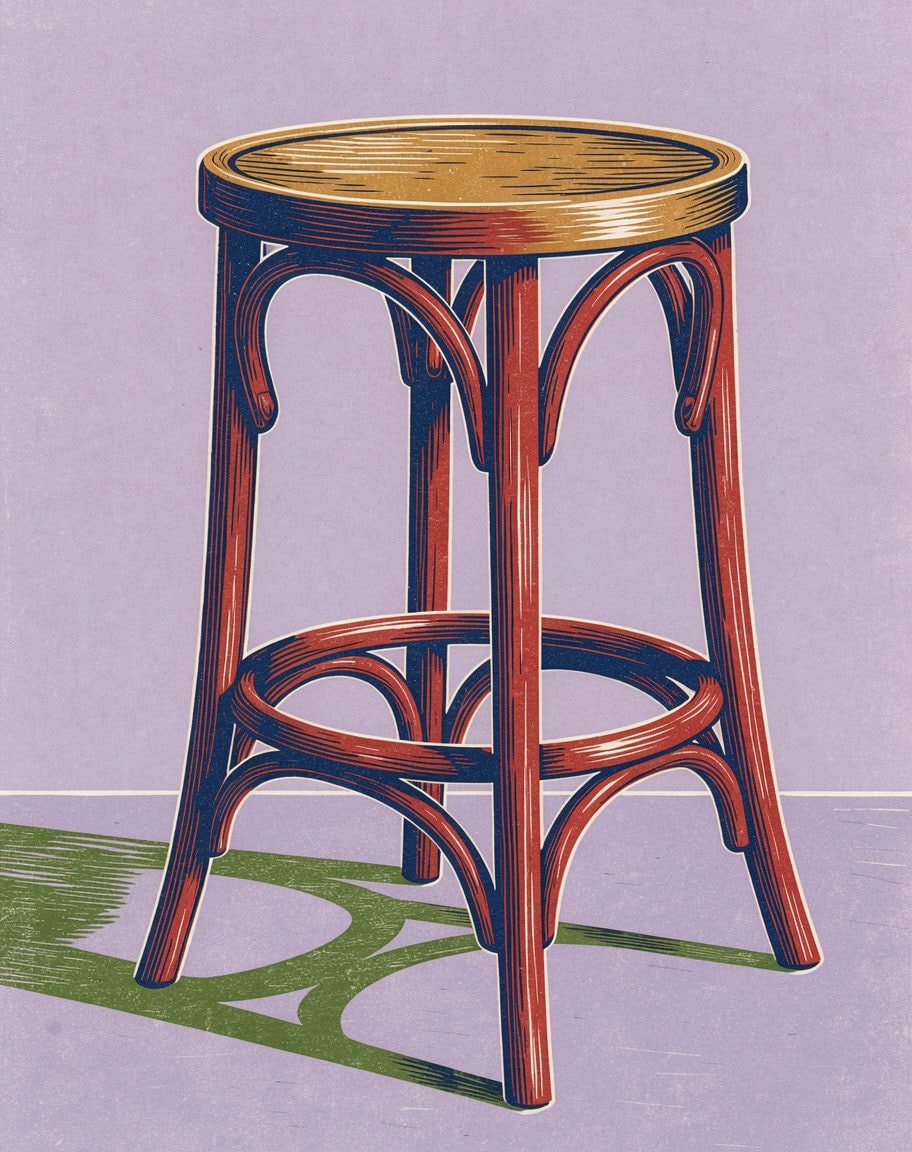
Pull a stool up to a high counter and the first thing you may notice is the place to put your feet. Take the rail away and the same seat feels different. Many of the details built into familiar furniture become apparent only when they are missing.
A seat begins with a surface
A broad stone bench carries weight through its mass. Several people can share it, and nobody has to decide which end is the front. Wood and woven materials open up other possibilities. A seat can be carried, a back can bend a little and legs can be set at an angle to resist tipping. A stool made of three legs will meet an uneven floor differently from one with four.
An Articlesland contributor imagined a leader pulling up a rock to sit above the ground. It makes an entertaining image. It is also a story the writer conceded might be fanciful. Actual seats served different purposes in different places. Stone seats in public spaces, simple domestic stools and elaborate seats of authority need not represent successive steps in a single invention.
Look under the upholstery
A cushion can be lifted from a bench. In an upholstered chair, the covering, stuffing and frame work together. Fabric takes the wear, filling changes the way weight is distributed and the underlying structure carries the load. A worn piece can reveal a surprising amount about how it was assembled.
Consider how a deck chair lets a sling take the shape of the sitter, or how a sofa spreads weight across a longer frame. Neither has to resemble a barstool for all three to answer the same ordinary need.
Three details worth noticing
| Part | Question to ask |
|---|---|
| Seat height | Can the sitter reach the floor or a footrest comfortably? |
| Back and arms | Does the seat invite a short pause or a longer stay? |
| Feet and rails | How does the frame stay steady when weight moves? |
Look again at the seat closest to you. Ink rubbed off one corner, a polished foot rail or a worn place along the back can tell you how someone actually uses it. That is a good starting point for a short piece of observational writing.